Training & Schedule
A continuous ten to eleven week season on snow, and conditioning before it.
The schedule
On snow, at Alpine Valley Resort
All age groups, in all programs unless the session says otherwise.
| When | Time | Period |
|---|---|---|
| Saturday | 9:00 a.m.–12:00 p.m. | DecemberSome December weekends run early, 7:00–10:00. Coaches confirm in advance. |
| Sunday | 9:00 a.m.–12:00 p.m. | December |
| Thursday | 6:00 p.m.–8:00 p.m. | December to FebruaryUSSS and FIS athletes only. Usually Thursday; occasionally moved to a Wednesday. |
| Tuesday | 6:00 p.m.–8:30 p.m. | December to February |
| Saturday or Sunday | 7:00 a.m.–10:00 a.m. | January to FebruaryTraining takes whichever weekend day has no MWAR race: race on Saturday, train Sunday; race on Sunday, train Saturday. |
Dryland
Age groups: U14, U16, U18.
| When | Time | Period | Where |
|---|---|---|---|
| Sunday | 4:00 p.m.–6:00 p.m. | From SeptemberOpen to athletes not in a fall sport, and to anyone in one who can make it. A good way for new athletes to meet their coaches before the snow. | Mukwonago High School outdoor track |
The on-snow season runs from the first weekend in December to the second weekend in February, snow allowing. We expect athletes to attend throughout. It is a continuous program, not a drop-in one.
Before the snow: dryland
Training in the off-season improves your skiing. Ours combines strength, endurance, balance and ski-specific work, and it is where a lot of new athletes first meet their coaches and their group.
Sessions are planned mainly around athletes who are not playing a fall sport, but anyone who can get there is welcome.
Goals: build the specific strength that skill development on snow depends on, train balance actively, sharpen focus, and get everyone keen for winter.
What to bring
- Water or a sports drink. Not soda.
- Proper athletic footwear. No sandals, no hiking shoes.
- Athletic clothing that stays where you put it. No jeans.
- Layers you can add and shed. Dress for the weather.
A typical session
A warm-up run and exercises, core conditioning, forty-five minutes to an hour of obstacle and interval work, then a cool-down and stretch.
On the hill
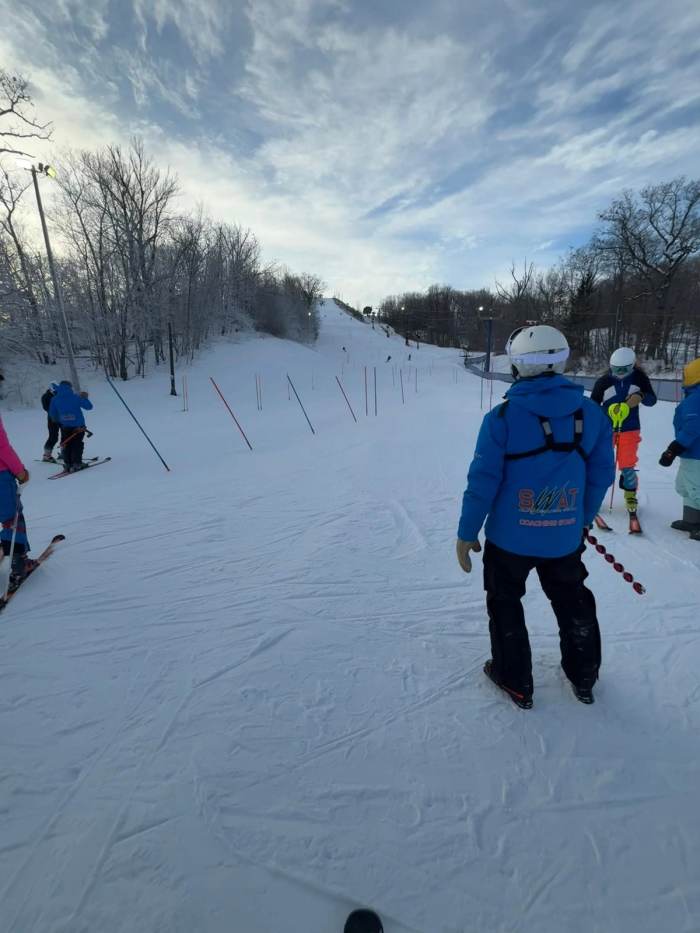
Coaches expect athletes fifteen to thirty minutes before the session starts, enough time to boot up, dress for the weather, and get outside for warm-up exercises. Athletes should be in the lift line before the lifts start.
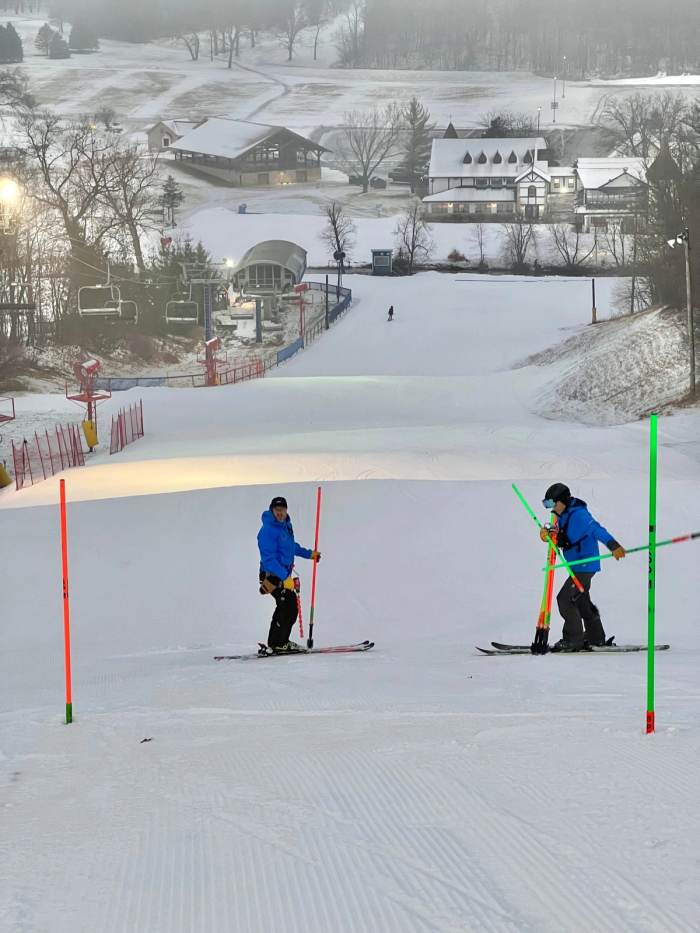
All slalom and giant slalom gate training is on Big Thunder, and our home race runs on Big Thunder for every class of racer. Coaches use all the runs at Alpine Valley and ride the quad chairs for training.
We meet in the Fairview Cafe at Alpine Valley. This can change depending on the crowds the resort is expecting; coaches will tell you when it does. Athletes store boot bags and backpacks in a designated area. The room is open to the public, so listen for those instructions.
Every athlete under 16 needs a parent or guardian on the property for the whole session, at Alpine Valley and at every hill hosting a race. No exceptions, and children are not dropped off.
The same group of coaches and athletes generally stays together all season. Occasionally someone is reassigned to better match a group of similar skill, particularly in the entry-level programs.
What a session covers
Every program works through the same seven areas:
- Directed free skiing. Skiing with a technical goal set by the coach, applying skills to whatever the terrain and the snow are doing that day.
- Turn techniques. How the intensity, duration and timing of a movement decide the size, shape and speed of a turn, including carved turns and what the body and the ski are each doing.
- Skill development. Exercises built to improve race performance through technique.
- Gate drills. Slalom and giant slalom gate combinations, at drills appropriate to the athlete's age and ability, developing technique and tactics together.
- Course description. How to race the different courses that get set: flow, tempo, using the terrain, and the turns that are actually hard.
- Race procedures. Course setting, the start and finish, and the rules a racer needs to know.
- Tactics. Choosing and maintaining equipment, sharpening, waxing, picking the right setup for the course, and the protective gear each type of race calls for.
Liability
Every athlete in any SWATeam Racing program must have a registration and liability release completed and signed by a parent or guardian before taking part.